

Inside the plans for London-style underground travel system in Greater Manchester
By Declan Carey - Local Democracy Reporter 14th Sep 2026
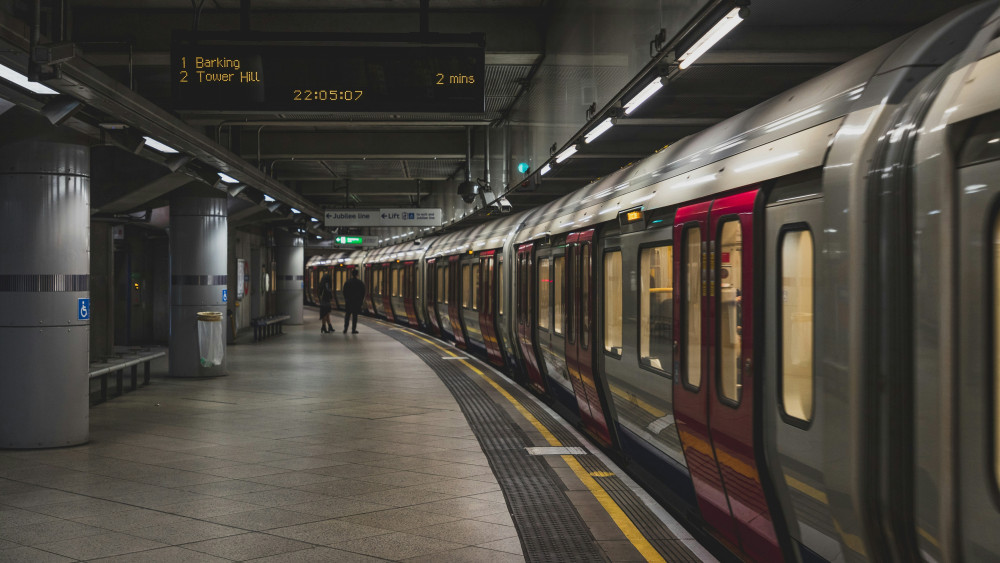
A 'mega' project to create Greater Manchester's own London Underground-style transport system has been backed by mayor Bev Craig with 2050 eyed as a potential opening date.
The enormous scheme would likely cost tens of billions of pounds and take decades to build with the need for government backing, but a new widescale underground transport system has been described by the mayor as the 'only option' for Greater Manchester's future.
Some have speculated that a future underground metro system could mean millions of journeys a day happening below the surface, speeding up the time it takes to get to Greater Manchester's busiest destinations and lifting pressure from roads, motorways and existing public transport services.
The idea is separate from demands from city leaders in Manchester for an underground railway station at Manchester Piccadilly, which would play a part in boosting railway travel supporting the £45bn Northern Powerhouse Rail project. But a new underground station at Piccadilly is seen as being an essential 'first step' ahead of wider plans for Greater Manchester, including the potential for a future underground tube network.
A new underground metro system in the region is far from being a pipedream, bosses at Transport for Greater Manchester (TfGM) have already spent more than £300,000 on early feasibility and demand studies over future options after it became a key aim of former mayor Andy Burnham.
Work taking place at the moment includes early geological studies, known as 'route proving', such as identifying major obstructions such as the Guardian Underground Telephone Exchange, as well as looking at which parts of Greater Manchester's existing transport network will come under the greatest pressure by 2050.
TfGM's own timeline for the project could see detailed plans and a business case ready by 2030, with a push to secure the powers and funding to start building by around 2040, ahead of a 2050 potential opening date.
Bev Craig told the Local Democracy Reporting Service: "Greater Manchester is the fastest growing city region in the country. Every year more people are coming here to visit, work and live.
Download our Nub News App!
- It’s FREE and available now- Breaking news notifications
- Your Town in Your Pocket


"Too often our congested rail network causes delays for passengers and inconvenience for businesses. We need a transport network that helps us go even further – not one that holds us back.
"In Greater Manchester we've started planning for what future is possible, and that means going underground.
"A new, modern underground station at Piccadilly is an essential first step in creating jobs and boosting major regeneration here.
"An underground station at Piccadilly would open the door to a wider underground transport system that, for me, is the only option that's fit for a world-class city region like ours. Over the last few years, I've led the campaign for our underground station and, as mayor, I'm continuing to make the case to government to get the right solution for Greater Manchester.
"We also need to think big when it comes to the decades ahead. Our roads are congested and building new networks above ground will be tough. Major cities around the world have gone underground, why can't Greater Manchester? Manchester Piccadilly station is the first step in unlocking a bright new future."
It is understood that any tunnelling for a future underground transport system would initially be focused around central Manchester, but a mix of options for how it could work are actively being looked at.
Underground options being explored for the region include a Metrolink relief tunnel going south-west to north-east aligned with the longest serving and busiest Metrolink lines, Altrincham and Bury.
A National Rail relief tunnel is also being looked at, which would go north-west to south-east, aligned with the Castlefield Corridor and Salford Crescent to Piccadilly. This would focus on high-frequency and high-capacity services using an approach similar to the Munich S-Bahn and London's Elizabeth line.

The third option being looked at is for a wholly segregated underground metro system going north to south, plugging a gap in an area that currently has no tram or train lines running broadly from the Northern Gateway to the Airport via a number of hospitals, universities and other major facilities.
Business leaders and politicians around Greater Manchester have said that the need for a London Underground-style transport system in Greater Manchester is increasingly becoming a 'must have'.
But to move forward any future project would require firm government backing and hard cash.
Prime Minister Andy Burnham said in 2024 when he was mayor of Greater Manchester that the region 'has to go underground' to continue growing. It was a story featured on the front page of the Manchester Evening News and shared by Mr Burnham himself on social media at the time.
The question is whether his government would be willing to turn the plans into reality.
Many figures in Greater Manchester believe the plans must move forward at pace to take some of the stress away from Bee Network trams and buses, as well as easing congestion on roads and motorways.
"An underground tube system is the only credible option for Greater Manchester going forward," said Robert Downes, regional business manager at the Federation of Small Businesses in Greater Manchester.
"You ask businesses what's important to them when it comes to transport, and you soon understand where they're coming from: any system that can move people around at scale can only be a good thing.

"Whether it's customers or staff, effective mass transportation by whatever means – road, rail, or tram – is a massive boon for businesses.
"Just look at London. It's a magnet for commerce and that's partly because the public transport system there is so well-rounded. London is the only place in all the UK where not owning a car is genuinely doable for the many.
"A GM tube could make that a reality here, but it would cost mega-money and take decades to build."
Mr Downes said that the region's tram system, 'while great, is clunky, and takes up valuable overground infrastructure space'.
He added: "To expand it meaningfully in a city region that's already desperately short on real estate means tunnelling is the only credible path.
"Underground would take much of the pain out of the planning process but the catch is it doesn't come cheap.
"Ultimately, Greater Manchester needs and deserves better public transport if we are to achieve our ambitions of becoming a truly world leading, global hub."
Manchester City Council leader Garry Bridges has also supported the need for better transport options around the region.
He said: "It's right that we look ahead to the transport challenges of the future to ensure Manchester can continue to flourish.
"In this country it can be frustrating how long it takes to build the infrastructure we need which is why it's important to get ahead of the curve now.
"The first fight we need to win is securing a new underground station at Manchester Piccadilly. This will ensure that the full benefits of Northern Powerhouse Rail, which the Government is committed to, are maximised.
"An underground Piccadilly Station would sit at the heart of the Northern Powerhouse Rail, allowing through services and scope for further growth.
"An underground rapid transit system is an interesting, and potentially exciting idea, which is worth exploring. But an underground Piccadilly Station really is the vital first step to any wider underground system."
Manchester city centre would be an obvious starting point for an underground metro system, and could speed up journeys for huge amounts of people who currently rely on buses or car to trek across central Manchester.
Councillor Jon-Connor Lyons, who represents the Piccadilly ward in Manchester, said of the plans: "Manchester can't keep growing above ground while pretending the answer to our transport needs isn't below our feet.
"I fully back plans for an underground station at Piccadilly and a tube-like transport network, it will be a genuinely ambitious approach to how we move people around our city.
"Done properly, this could transform accessibility across Manchester and unlock areas across Greater Manchester for new homes and jobs.
"A better-connected Manchester isn't just about getting from A to B faster, it's about creating one truly connected city region and giving people access to opportunities wherever they live."
Others have stressed the need for underground travel to go beyond Manchester city centre to other boroughs.
Jonathan Moore is leader of Salford Lib Dems and a councillor in Salford Quays, an area with big plans to grow with MediaCity set to double in size in future years.
But public transport options in Salford Quays are already under major strain, with reports of passengers 'struggling' to get home.
Councillor Moore said: "We've already seen a shift away from cars. New flats are built without parking. New houses have less parking. Parts of the city are closed to cars.
"The environmental impact of this is clear and beneficial. However, this only works when new alternatives are put in place to keep up with demand, which in GM is growing far faster than supply."
The Salford councillor explained that Metrolink trams can be 'very slow and clunky', and 'can only go where there is space to install new lines'.
He added: "In my ward at Salford Quays, the population is set to at least treble to 40k people by 2040. It is inconceivable that the above-ground Metrolink can cope with that growth.
"In London, most people use the underground. A population of circa 9 million across Greater London make 4-5 million journeys on the underground every day.
"In GM we have circa 3 million people, so a similarly comprehensive network could cater for 1-2 million journeys a day. Imagine the benefits to our cities, suburbs and motorways if we saw that here.
"At a meeting I attended with Highways England in July, we were told that the northwest quadrant of the M60 is now the worst performing motorway in the UK if you exclude the M25.
"Roughly half of the journeys on that section are local commuters traveling 1-2 junctions. The distance is too great to walk, and not everyone can or should cycle, but everyone can use an underground. If we had an underground, traffic would flow better on the M60, which would save hundreds of thousands of hours a year and our economy would reap the benefits.
"An underground will only happen if the politicians of today are determined, focussed, and brave in the way that the Victorians were. We have the engineering capability, far more than the Victorians had, and we have the knowledge of the need and the climate imperative.
"All that we don't have is the cash and the determination. Now is the time for national and local politicians to find these missing ingredients."
Asked about the plans for underground travel in Greater Manchester, a Department for Transport spokesperson said: "Everyone across the country should have access to good public transport, which is why we are working closely with Greater Manchester to look at improving connectivity across the North.
"As part of this, we're reviewing the possibility for an underground station at Manchester Piccadilly for Northern Powerhouse Rail."
Categories:
Download our Nub News App:
- It’s FREE and available now
- Breaking news notifications
- Your Town in Your Pocket



Share: