
Everything you need to know about the election to be Greater Manchester mayor
By Declan Carey - Local Democracy Reporter 15th Jul 2026
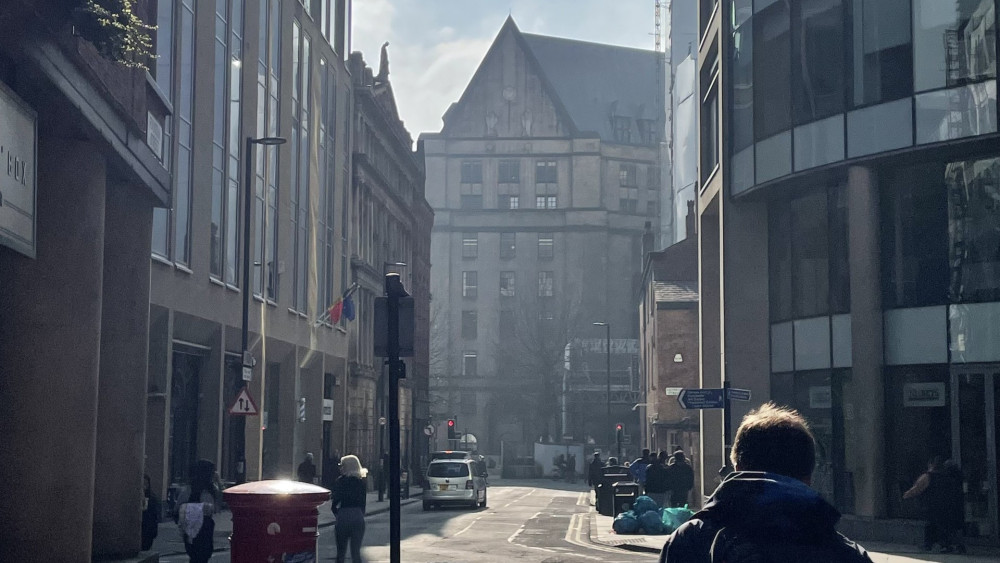
An election is taking place this month that will have enormous consequences for the future of Greater Manchester.
Voters will decide on July 30 who will become the region's new mayor, a job that comes with major powers and responsibilities.
The mayor has a direct say over setting budgets and priorities for Greater Manchester's public services – and over the future of matters such as transport, housing, policing and many other issues which touch every aspect of life for more than three million people.
With the crunch decision just weeks away, campaigning is already underway among the candidates hoping to become Andy Burnham's successor.
A poll published by the Manchester Evening News in June revealed Labour and Reform UK are separated by just three points in the battle for the next mayor, which is set to be one of the most fiercely contested elections in the city-region's history.
With so much at stake, a handy guide has been put together for what happens next and all the key dates readers need to know before election day.
Why are we having an election for Greater Manchester mayor?
Andy Burnham had served as mayor of Greater Manchester since 2017, but this year decided to try and return to Parliament as an MP.
Josh Simons resigned as the MP for Makerfield in May, sparking a by-election in the constituency.
Download our Nub News App!
- It’s FREE and available now- Breaking news notifications
- Your Town in Your Pocket


Mr Simons said he was standing down to make way for Andy Burnham to run for the job.
The Makerfield by-election was held on June 18 and Andy Burnham won as Labour's candidate, which made him an MP.
At that moment, he was no longer able to serve as mayor of Greater Manchester, so the role became vacant.
Days after Andy Burnham's victory in Makerfield, the current Prime Minister, Keir Starmer, resigned as leader of the Labour Party.
Andy Burnham as an MP is the only candidate running to be the next Labour leader, and has so far won the backing of 322 Labour MPs.
It means Mr Burnham is all but set to become the UK's next Prime Minister, a move which could be completed as soon as July 20.
Meanwhile, Greater Manchester needs a new mayor, so an election has been called and will take place on July 30.
How do you register to vote and when is the deadline?
More than two million people are eligible to vote in the election to choose Greater Manchester's next mayor.

The deadline to register to vote is 11.59pm on Tuesday, July 14. It can be done on the government's website and takes just five minutes.
Those who are registered to vote but want to do so by post have until 5pm on Wednesday, July 15 to apply for a postal vote.
To vote, people must be on the electoral register and have a valid form of photo ID if they are voting at a polling station. Photo ID could be a passport, driving licence, some types of bus pass, or a proof of age card.
For anyone without an accepted form of photo ID, voters can apply for a Voter Authority Certificate and the deadline to apply for this is 5pm on Wednesday July 22.
Voting can also be done by proxy, which is when you appoint someone you trust to vote on your behalf. The deadline to apply for a proxy vote is 5pm on Wednesday July 22.
The election for Greater Manchester mayor will be held on July 30, with polls open between 7am and 10pm.
The result will be announced on July 31.
Who are the candidates standing to be Greater Manchester mayor?
Seven candidates have put themselves forward to stand for Greater Manchester mayor.
Sian Astley – Reform UK
Sian Astley is a businesswoman and property expert who leads the Reform UK group at Manchester council. She has promised to place towns and areas across the city region 'front and centre' if she becomes Greater Manchester mayor. She recently said she stands by controversial comments suggesting that Green voters, 'uniparty' MPs and councillors should house 'illegal criminals, rapists and economic chancers'.
Geraldine Coggins – Green Party
Geraldine Coggins is leader of the Green Party group at Trafford council. She has vowed to create 20,000 new 'genuinely' affordable homes across Greater Manchester in ten years, as well as a high streets 'task force' to take over empty shops.
Bev Craig – Labour
Bev Craig is a councillor in Burnage and has been leader of Manchester council since 2021. During her time as council leader, she oversaw the biggest house building scheme in a generation, and has served as a deputy mayor at the Greater Manchester Combined Authority. One of her top priorities if elected mayor is free bus travel for all 11-to-18-year-olds across the region.
Phil Eckersley – Conservative
Phil Eckersley is a businessman and councillor in Trafford, where he represents the Bowdon ward. He founded Bridgewater Care Home in Wigan in 2010, which employs more than 100 people. He previously served as president of the Greater Manchester Chamber of Commerce Wigan division. He believes decisions are 'too often' made with a focus on Manchester city centre, with the outer boroughs getting 'left behind'.
Marcus Farmer – Independent
Marcus Farmer is a businessman standing as an independent candidate to be Greater Manchester mayor. He previously stood for election as mayor in both 2017 and 2021.
Richard Kilpatrick - Liberal Democrats
Richard Kilpatrick is a councillor in Manchester, representing the Didsbury West ward since 2018, He's called to make public transport free for all and wants to improve access to social care. He believes the affordable housing model needs a 'shake up' with inspiration taken from Scandinavia to create 'a cooperative level of housing provision'.
Marlon West – Restore Britain
Marlon West worked as a mental health nurse for 30 years before becoming a child exploitation campaigner. He has spoken publicly about how his daughter Scarlett was groomed aged 14. It's an issue which is a major part of his campaign, and he has pledged to set up a dedicated taskforce within GMP to look into historic cases if elected mayor.
Which voting system will be used?
The voting system has changed for the election of Greater Manchester mayor on July 30.
The last time Andy Burnham was re-elected in 2024, the first-past-the-post method of voting was used. This is the same system used to elect MPs, where the candidate who gets the most votes wins.
But the method to elect mayors was switched by the Labour government to supplementary voting this time around.
Voters will see two columns on their ballot papers to decide their first and second choice candidates to be mayor.
Only the first preference votes will be counted at first. If a candidate receives more than half the vote share, there's a clear winner, and the second preference votes will effectively be discarded.
But if there's no clear winner, second preferences will become crucial. The two candidates with the highest number of votes will go through to the next round of counting, while the rest are eliminated. In rare cases where there are ties, there can sometimes be more than two final candidates.
Second preference votes are added to the first preference votes for the remaining two candidates, and the person with the highest total wins.
Reform UK attacked Labour for changing the voting system, accusing the party of a 'cynical attempt' to influence elections.
Download our Nub News App:
- It’s FREE and available now
- Breaking news notifications
- Your Town in Your Pocket
Share: