Stockroom unveils Christopher Isherwood exhibition as part of LGBTQ+ History Month
By Leslie Kerwin 16th Feb 2026


"Come and wallow in voluptuous sin: Christopher Isherwood's 'Berlin Stories' now read almost like vignettes of nearly forgotten history. They blaze into life only because of his enchantingly wicked heroine, Sally Bowles."
So reads a scrap of long-forgotten news review, carefully clipped by a superfan to whom a gay immigrant who rejected his nationality was a more enchanting hero than the star of 'I Am a Camera'.
Slathered across the pages of a 1970s Muppet scrapbook, it's the last thing anyone would expect to see buried within Stockroom's historic archive. And that's before getting into their original edition of a book that – according to the world's Isherwood experts – never existed in the first place.
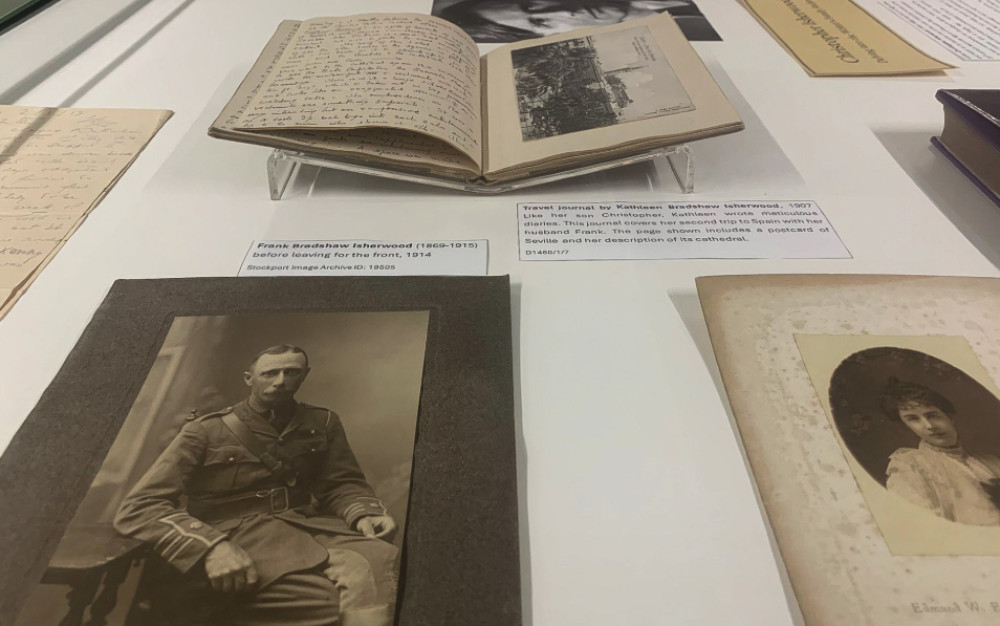
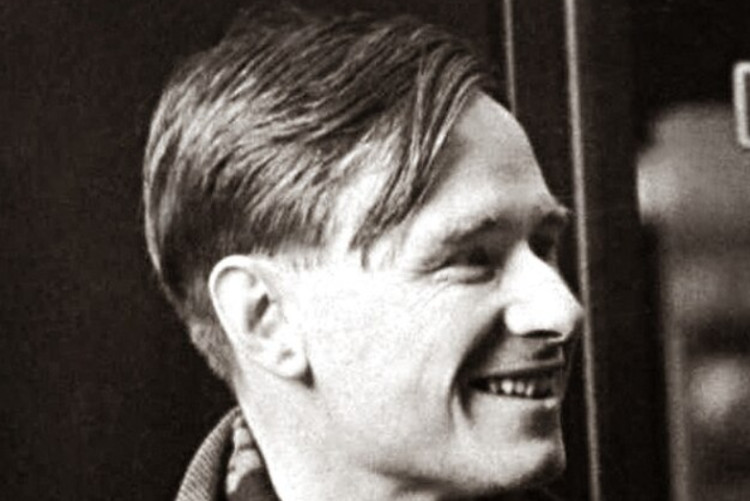
In celebration of LGBTQ+ History Month, Stockroom last week opened its Isherwood archive to the public, nearly 40 years to the day after his death from cancer in 1986. Isherwood is best known for penning vintage classics including 'Goodbye to Berlin' and 'A Single Man', but far less is taught the world over about his birth, and earlier life, in the outer rings of Stockport.
"He was born in 1904 in Wyberslegh Hall, near High Lane in Cheshire; this was one of two historic buildings which belonged to his family, the other being Marple Hall," says Andrew Biswell, a Professor of Modern Literature at Manchester Metropolitan University. A fellow of the Christopher Isherwood Foundation, he has spent 12 years researching the writer's life – driven largely, he says, "by the pleasure of reading him".
"In a lecture in America in 1960," he continues, "Isherwood described Wyberslegh Hall as a little Elizabethan farmhouse which was on the very edge of the moorland, in the corner where Cheshire touches Derbyshire. This, he said, is the moorland of Wuthering Heights."
His mother had been part of a wealthy brewing family, his father a professional soldier. To both, he had grown distant, never fully discovering the love he had for them until reading their diaries after their deaths. Frank Isherwood was killed in the Battle of Ypres, and remembered only in the Marple War Memorial and the young mind of Christopher; he would one day write 'The Memorial' – "his big Stockport novel" – about a closeted gay man whose family fell apart after the war.
Download our Nub News App!
- It’s FREE and available now- Breaking news notifications
- Your Town in Your Pocket


"He was ten years old, and he was told by establishment figures that he must live up to his father's example, that he had an obligation to behave at all times in a way that was worthy of Frank's sacrifice. And he rejected that," Biswell says.
"He had no time for 'the authority of the flag, the old school tie, the unknown soldier, the land that bore you and the god of battles'."
After being kicked out of university, then dropping out of medical school and living from odd jobs, he would publish his first novel in 1928 before moving to Germany. "Berlin meant boys", Isherwood would later write about the city that birthed Europe's gay liberation movement. The city eventually fell victim to Germany's turn to fascism, and he soon found himself fleeing across Europe with his partner Heinz, who was on the run from – and later captured by – the Nazis.
It was as he left for America in 1939 that he wrote 'Goodbye to Berlin', which would inspire the smash-hit Broadway musical 'Cabaret'. Alongside a dazzling writing career, he eventually converted to Hinduism in his forties, before meeting his lifelong partner Don Bachardy, who still paints every day at their Santa Monica home at the age of 91.
"When he looked back at his life, he said it had been dominated by two things," Biswell says. "The family house, Marple Hall, and the knowledge that John Bradshaw – who owned and lived at Marple Hall – had been one of his ancestors."
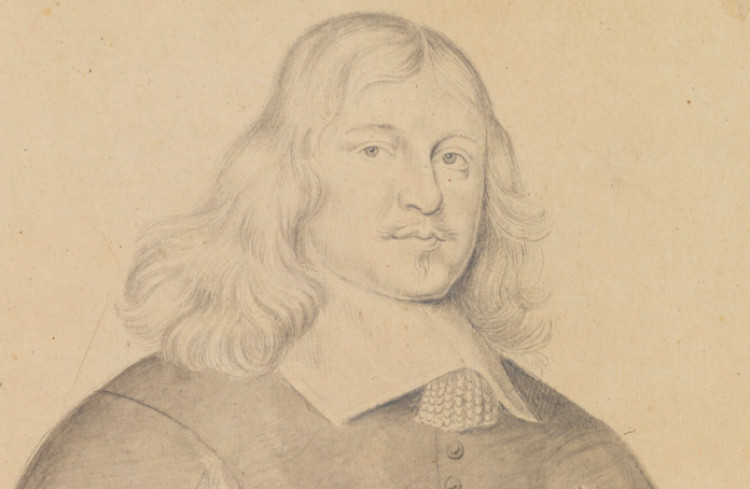
Bradshaw, who was himself born in Stockport in 1602, was the lawyer who signed the death warrant of King Charles I, and the source of much controversy for his descendants. Some were proud to have an ancestor who killed a king, while others were "horrified" – particularly Isherwood's aunt, who prayed through tears nightly, convinced the family was cursed.
Marple Hall was left to Isherwood's younger brother, Richard, who was too poor to prevent it from decaying and being looted. It was eventually torn down by Stockport Council in 1959, and when Isherwood later returned home, he was delighted to find the land taken over by Marple Grammar School.

"He felt it was the family curse which had been hanging over him. He said Marple Hall had ruined his mother's life, threatened to drag him down, and he was delighted it had gone and had become something more useful as a school."
Stockport, Biswell says, is a place Isherwood always found himself drawn back to, despite rejecting it for much of his life. His brother Richard – also thought to be gay, albeit "in a terribly sort of closeted way" – remained in the borough, though deeply unhappy in a country where he didn't feel able to be himself.
"I think because of the laws on sexuality at the time, [Stockport] wasn't somewhere [Christopher] felt that he could be," Biswell says. "But you know, it's changed so much that I like to think that this is a place where he could have made a life and become a writer without having to go all the way to California."
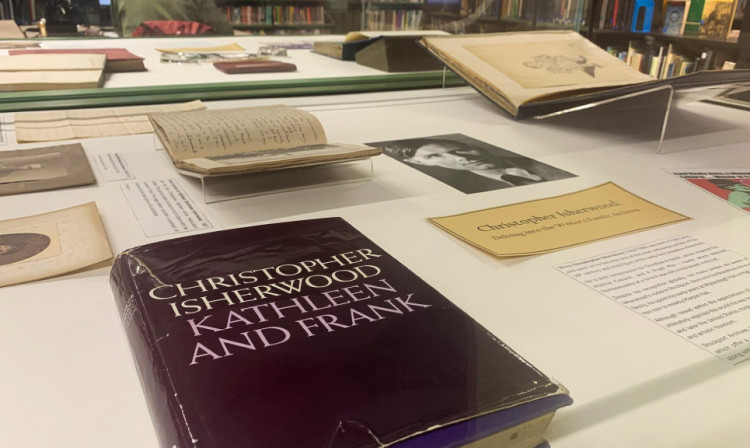
The last pieces of Isherwood's life are scattered across the globe, with several pieces now thought to be vanished forever, including paintings by his father which were looted from Marple Hall. The same was believed of a handmade picture book gifted from his parents, considered a myth by many historians – until Stockroom unveiled the original edition in its own Isherwood collection, which is now on display in the library.
"We met with Katherine Bucknell, because she said she read about it in his diaries, but it was presumed lost in California," says Nicole, an archive assistant at Stockroom.
"She was really delighted to see it here. The real one is in the glass case at the Heritage Library, and we made a replica."
Rounding off, Biswell wonders if more could be done to celebrate Isherwood's Stockport heritage: "I think the best memorial that he could get would be some sort of celebration, maybe a festival in Stockport. I think to get musicians and actors and artists and writers to respond to his work would mean that it had a meaning for people now.

"Isherwood, we're discovering now, is a writer from our own times. His work is politically aware, unapologetic about his sexuality, and like the man himself, it's endlessly charming and captivating."
Stockroom's Isherwood exhibition remains on display in the library's upper floor, with the full archives available via appointment.
Download our Nub News App:
- It’s FREE and available now
- Breaking news notifications
- Your Town in Your Pocket

Share: