A husband's violent frenzy and a town's macabre fascination - Stockport's dark past
By Stockport Heritage Trust 2nd Sep 2026


By Maureen Fahey
"I declare publicly to all the world that I have brought upon me this shameful end by following bad women. I had tarried late that night in company with one at Stockport and getting upset in my mind, came home and committed the horrid crime for which I am now going to suffer."
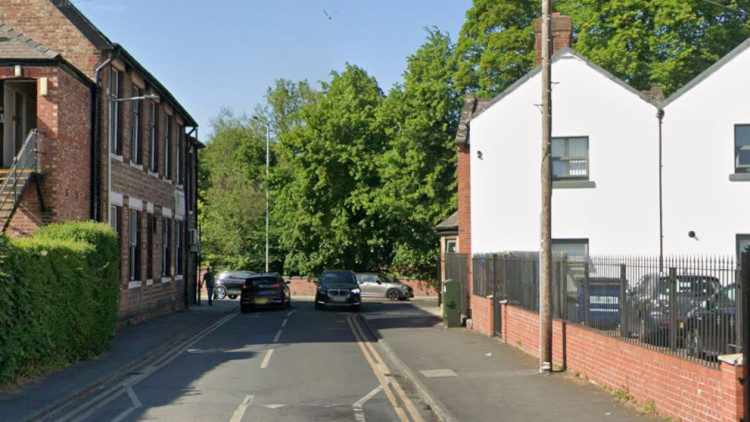
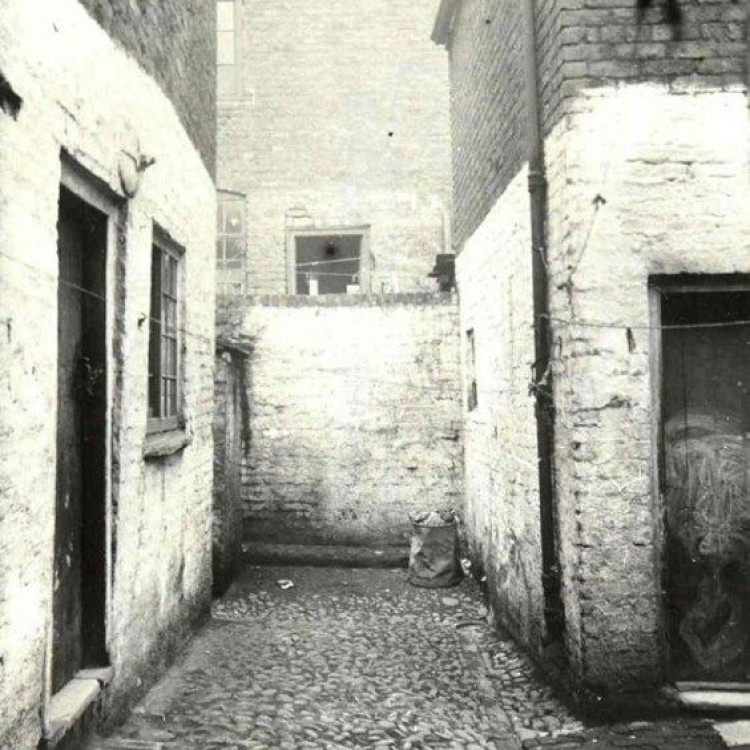
So read the final confession of John Dean, who lived with his wife Betty and their four children in a rundown house in Watson Square, off Middle Hillgate, in 1790. The dwelling was shared by lodgers Mary Bell and her elderly parents.
On Saturday the 19 June, thirty-nine-year-old Dean finished his work as a weaver at a local mill, then spent the evening drinking heavily with a woman named Sal Fogg, a 'woman of easy virtue', from Cheadle.
Dean returned to Watson Square around midnight, very much the worse for drink; shortly afterwards, a row broke out between him and his wife, who was then seven months pregnant, and he began to beat her savagely in the bedroom, waking the children and Mary Bell in the process. Mary's father, William, being drunk, slept on, as did her mother, who was profoundly deaf.
Mary, together with Dean's fourteen year old son Thomas, interceded to try to save Betty but Dean turned on them both. Mary, fearing for her own life, leapt from an upstairs window and ran to find a policeman. Betty then fled downstairs as Dean followed, knocking her from room to room in a prolonged frenzy of violence.
Even as his stricken wife lay on the living room floor, saturated in blood and very close to death, he continued his sustained attack, pausing several times over the following hour to rest before resuming the onslaught of kicks and punches.
Mary returned to Watson Square with the constable, Thomas Thorniley, and they looked through the window to see Betty's inert form drenched in blood in front of the fireplace. Her body then moved, convulsively, at which point they heard Dean shout 'Damn thy soul! Thou aren't dead yet!' (these words sometimes being reported as 'Damn thy soul, aren't thou dead yet?') as he continued to punch and kick his stricken wife.
Incredibly, Betty was indeed still alive at that point but died about an hour later, after which a local surgeon, Robert Clarke, desperately performed a Caesarian section on her corpse; tragically, the perfectly developed baby was also dead, killed in the womb by the blows to its mother's stomach.
Download our Nub News App!
- It’s FREE and available now- Breaking news notifications
- Your Town in Your Pocket


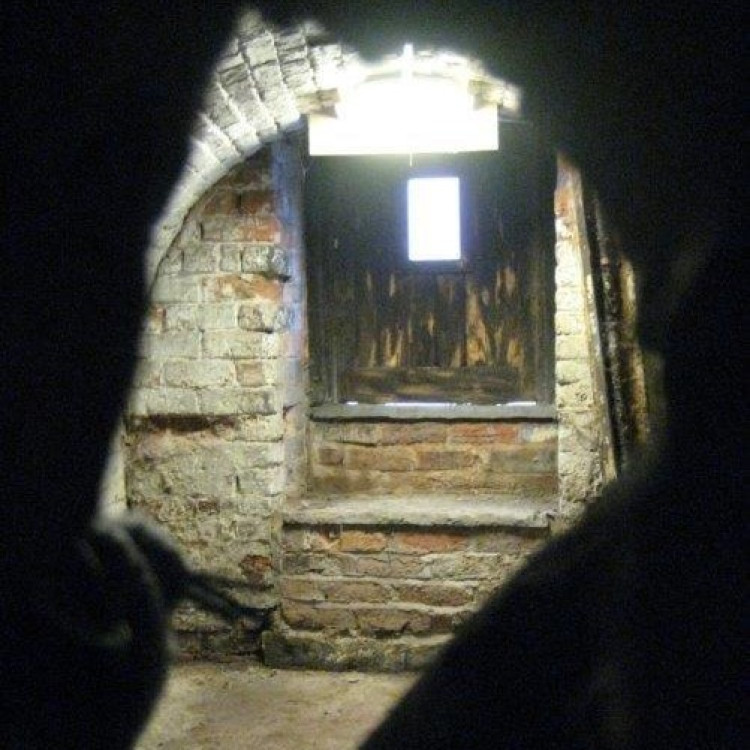
It took four strong men to drag the alcohol-crazed John Dean from Watson Square to the lock-up on Mealhouse Brow, where he was thrown into the dungeon pending his removal to Chester on the 21st June for trial. Not surprisingly, he was found guilty and sentenced to death and, reported the Chester Chronicle, '…the better to perpetuate his ignominy and render the example more permanent, the Court ordered him to be hung in chains' in accordance with the Murder Act of 1751, which decreed that 'In no case whatsoever shall the body of any murderer be suffered to be buried'.
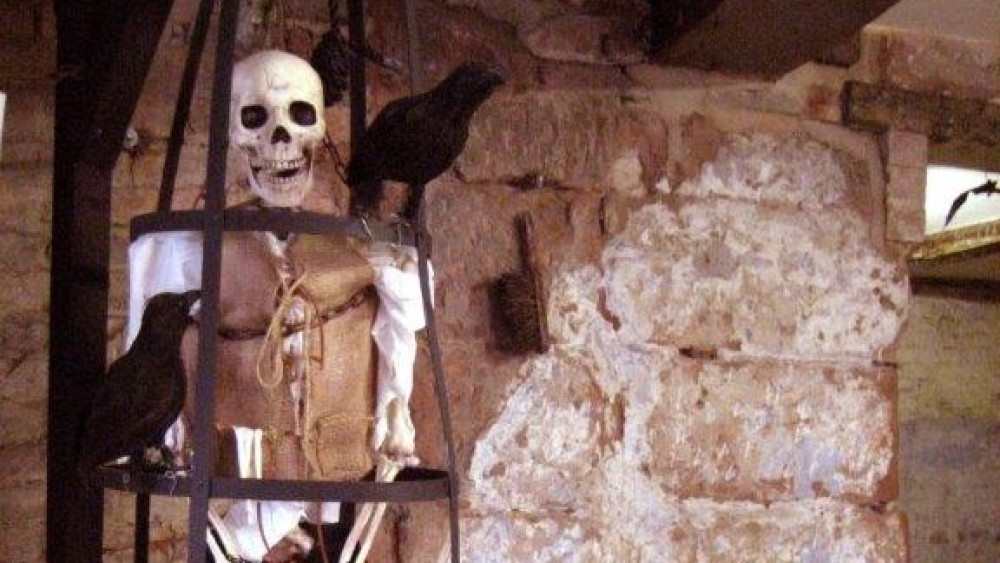
Execution was therefore followed either by public dissection or 'hanging in chains', the latter being known as gibbeting, whereby the murderer's body would be suspended from a gallows in an iron cage and left to rot by the wayside as a deterrent to other would-be miscreants.
Dean's execution took place at Gallows Hill in Boughton, overlooking the River Dee, on the 2nd September, after which his body was brought back to Stockport and as the cart bearing its grisly load reached Brinksway, the sheriff ordered that the hoop iron cage containing the corpse be hooked up to the gibbet, which was then hauled upright for the delectation of the many spectators. In 1849, Charles Dickens wrote 'When the day dawned, thieves, low prostitutes, ruffians, and vagabonds of every kind flocked on to the ground with every variety of offensive and foul behaviour.
A sight so inconceivably awful as the wickedness and levity of the immense crowd could be imagined by no man. Fighting, fainting, whistling, brutal jokes, tumultuous demonstrations of indecent delight when swooning women were dragged out of the crowd by the police, with their dresses disordered, gave a new zest to the general air of entertainment.' Dickens was writing about the spectacle of a public hanging but so apt was his description of the scene that the subject could just as well have been the reception of the corpse of John Dean by the crowds thronging the streets of Stockport that day.
The Reverend J. Meldrum of Hatherlow would later preach and publish a sermon on the subject of the crowd's behaviour, referring to it as a gross scandal and denouncing not only the act of gibbeting itself but the depraved taste of the populace, which was amply displayed in the carnival atmosphere of the occasion.
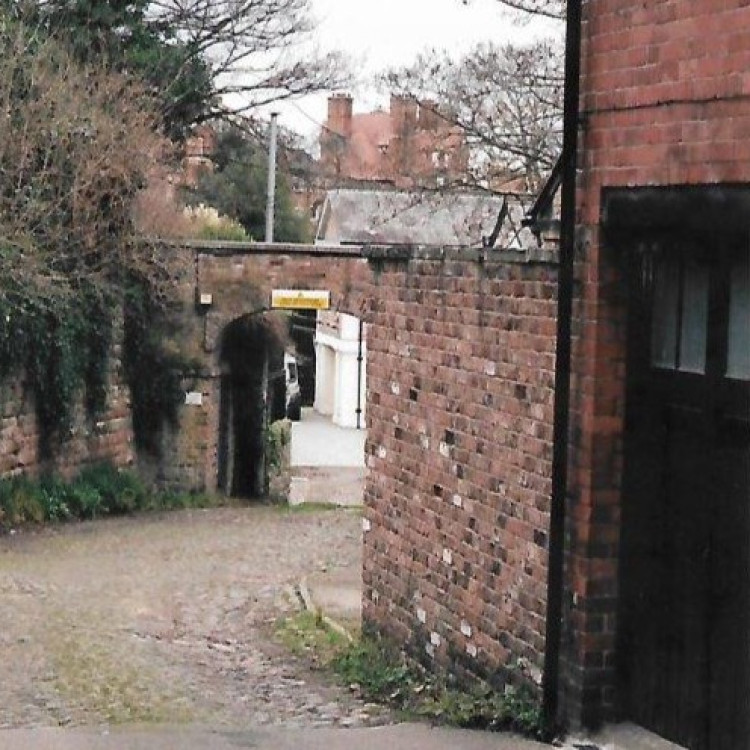
The macabre procession, including fifty horsemen, then made its way through Stockport and along Hillgate to Great Moor, with the lifeless Dean swinging grotesquely from the gibbet, before finally coming to a halt at Black Lake, near the present-day Cherry Tree Lane.

There, the gibbet was erected by the roadside, where it remained for some time, the murderer's black-shrouded corpse being gradually divested of its mouldering flesh by carrion crows.
Precisely how long Dean's remains festered in the gibbet cage is not documented but the celebrated traveller Lord Torrington came to Stockport in the summer of 1790 and recorded in his diary: 'Entering a town with all the damsels frisking around is very tremendous to a modern man and dashes one exceedingly; nor did I ever see smarter lasses than I met in my stroll after tea, with their petticoats so short as so oblige them to turn out their toes and exert their best paces.'
Upon his return to Stockport two years later, Torrington's journal entries reflected a very different mood; he wrote 'Under a misty rain I traversed the bad, stony road to Stockport in Cheshire. There, the black gibbet glooms by the way, for near to the town hangs a weaver in chains, for the murder of his wife, and my wonder is that murder does not happen every hour from external drunkenness!'
Reuben Smith wrote from his home in America to the Stockport Advertiser & Guardian in 1898 to relate that his great grandfather, Henry Wrigley, had told him tales of the gibbet and of the fear that it struck into those passing by.
In 1840, Reuben and his uncle, George Smith, planted potatoes on the site and unearthed irons that had been nailed, riveted or driven into the gibbet. Reuben recounts that 'Some of them had been curiously and cunningly fashioned by the blacksmith's hammer in order to prevent anyone climbing up to the body as it hung in chains.'
This was a necessary precaution, as some people would try to climb up to touch the gibbeted corpse for a dare.
Others believed that the body had healing, or even curative powers and, in the same way that a relic of a saint's body or clothing would be revered and venerated, parts of a gibbeted felon, or of the shroud that cloaked him, would be taken as trophies and in the hope that they would cure whatever ailed those who took them.

Eventually, some local people, sickened by the spectacle at Black Lake, cut down and burned the gibbet, buried the bones of John Dean and sold the iron to a blacksmith who lived in a nearby cottage.
The gruesome practice of gibbeting was abolished in 1834 but the story of John Dean does not end even there, for in the 1980s, George Chapman, whose home, Ash Cottage, stood near the site of the gibbet at the junction of Castle Farm Lane and Cherry Tree Lane, was digging in his garden when he unearthed pieces of ancient, hand-made chain with bone fragments attached to them.
Cherry Tree Lane was previously known as Gibbet Lane and Ash Cottage had once belonged to the local blacksmith. Did these grisly relics hark back over almost two centuries to the events in Watson Square on that hellish night? Sadly, we shall never know.
And what of Betty, whose young life, and that of her unborn child, was so viciously taken from her? She was laid to rest on the 22nd June in an unmarked grave in the tranquil churchyard of St Mary's in Stockport Market Place, just a stone's throw from the dungeon where her killer had been incarcerated. Whether the child who died with her also lies there is not known.
***
Stockport Heritage Trust volunteers open the mediaeval courthouse and dungeons on Mealhouse Brow to the public on the second Saturday of the month. Here can be found an effigy of John Dean in his gibbet cage, and replicas of the stocks, pillory and scold's bridle, all of which were forms of punishment until the 19th century. Underground are the two remaining dungeon cells, where you can go below the market place to see what life was like for the prisoners of old. Admission is free but donations are always welcome.
Download our Nub News App:
- It’s FREE and available now
- Breaking news notifications
- Your Town in Your Pocket

Share: